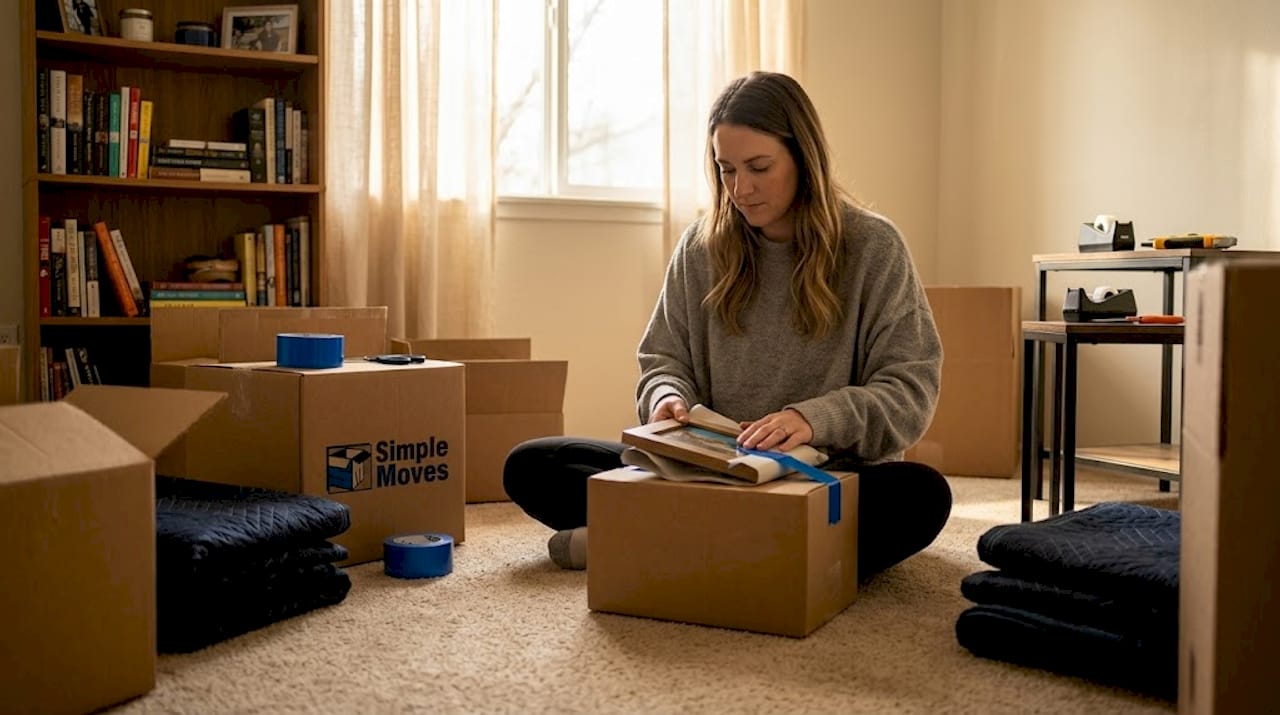
Moving day has a way of exposing every shortcut you took during preparation. Boxes without labels, rugs still on the floor, a hallway blocked by furniture you forgot to move — these small oversights compound quickly into a stressful, expensive day. Knowing how to prepare home for movers before the truck pulls up is the single biggest factor in whether your move runs smoothly or drags into overtime. This guide walks you through every stage, from organizing your rooms and communicating with your crew to setting up your new home with confidence.
Table of Contents
- Assessing and organizing your home before movers arrive
- Confirming moving logistics and communicating with your moving crew
- Packing and securing your first night essentials
- Executing moving day: final walkthroughs and safeguarding your home
- Verifying move completion and setting up your new home
- Why focusing on home readiness beats relying solely on mover skill
- How Simple Moves Fargo ND can make your move easier
- Frequently asked questions
Key Takeaways
| Point | Details |
|---|---|
| Prepare physical space | Clear walkways and organize belongings by room to allow movers to work efficiently and safely. |
| Confirm logistics | Verify arrival times, parking, and special requirements with your moving crew 48 hours before moving day. |
| Pack first night essentials | Keep a clearly labeled essentials box in your personal vehicle to access immediately after the move. |
| Communicate clearly | Inform movers of fragile items and priorities to prevent damage and delays on moving day. |
| Prioritize post-move setup | Unpack bed and bathroom items first and test utilities to settle comfortably in your new home. |
Assessing and organizing your home before movers arrive
With a clear understanding of why home readiness matters, let’s dive into specific steps to organize your home before the movers show up.
Most homeowners focus their energy on packing boxes and forget that the physical environment of the home is just as important. A cluttered hallway or a rug left in a high-traffic area can slow your crew down significantly and create real safety risks. Moving-day readiness — meaning clear access, proper labeling, and staged essentials — is consistently the biggest factor separating smooth moves from chaotic ones.
Start by walking every room and identifying the main pathways movers will use. Clear those paths completely. That means moving side tables, rolling up rugs, and removing anything that narrows a doorway or hallway. Outside, check that the driveway and walkway to the front door are free of obstacles. In winter here in Fargo-Moorhead, that also means salting icy steps and clearing snow from the path to the truck.
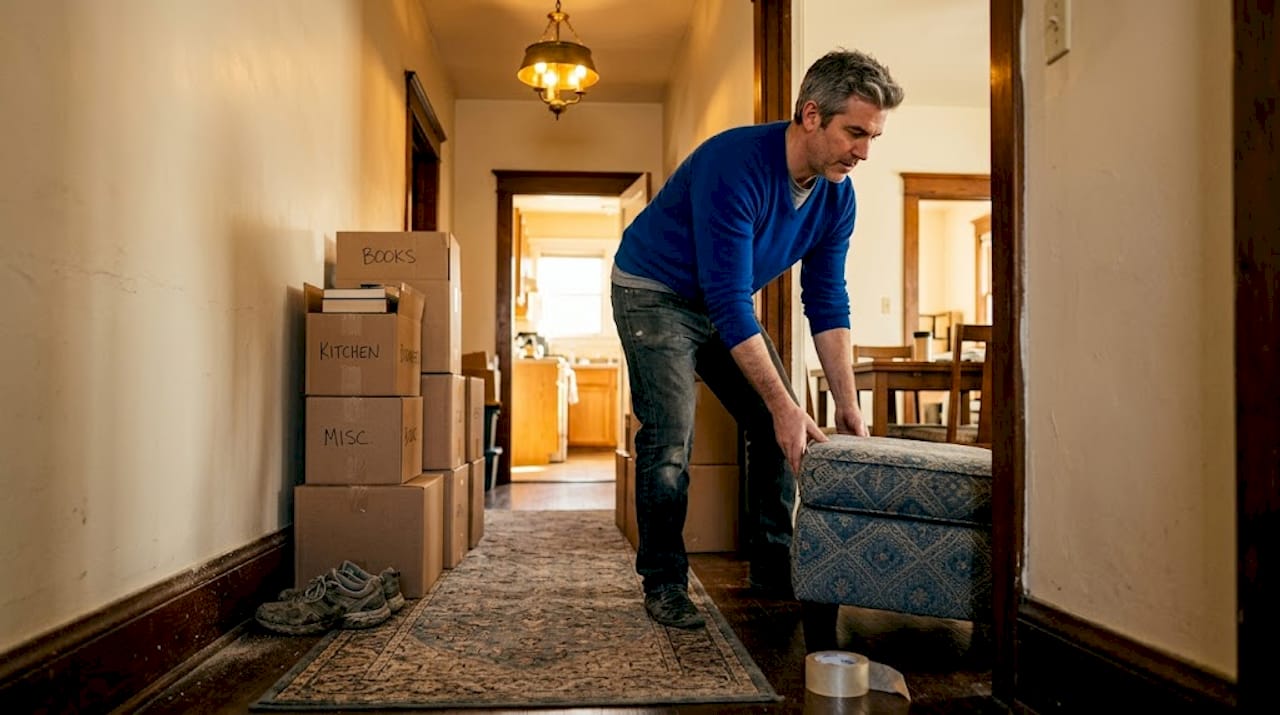
Labeling is where most homeowners do the minimum and pay for it later. Write the destination room and a priority level on every box. More importantly, label at least three sides of each box, including the top. When boxes are stacked, the side labels are often the only ones visible. A simple system like “Kitchen — fragile” or “Master bedroom — open first” gives movers everything they need to place items correctly without asking you.
Set aside two categories of boxes before movers arrive. The first is your “do not pack” zone: items staying with you, like your laptop bag, medications, and the kids’ car seats. Mark this area clearly with tape or a sign. The second is your essentials box, which we cover in detail later. Both categories should be physically separated from everything else, ideally near the front door or in a room movers won’t enter.
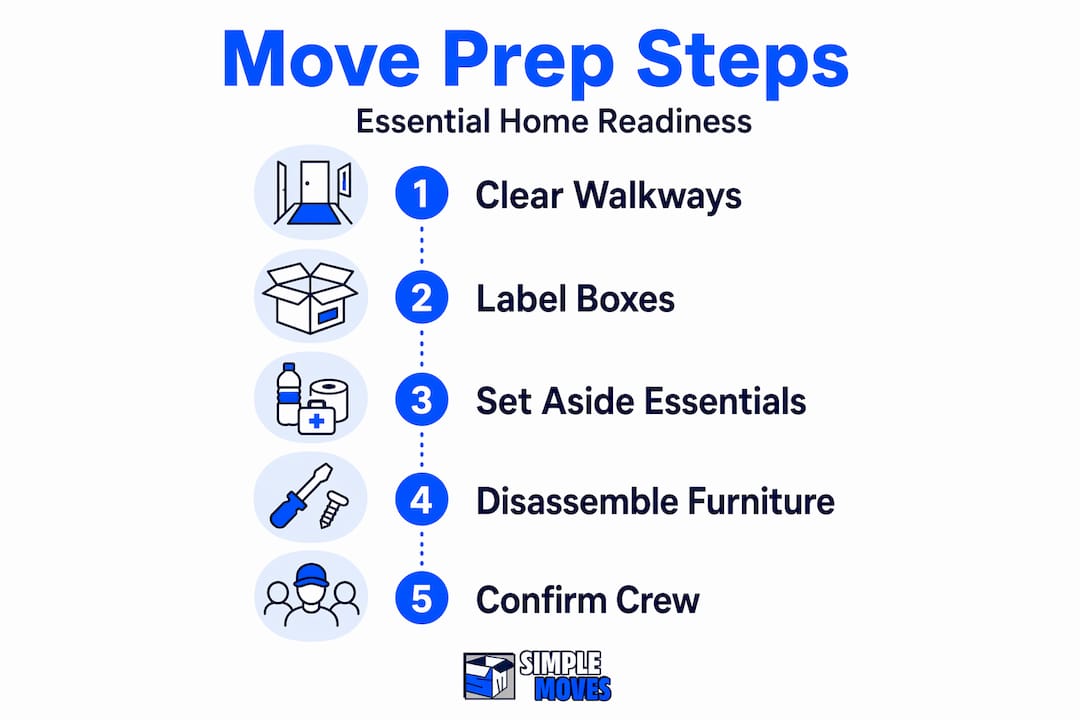
Disassemble furniture you know will need it, such as bed frames, large shelving units, and dining tables. If you need help with that step, packing services from a full-service moving company can handle both packing and disassembly so you are not scrambling the night before.
| Preparation task | When to complete it | Why it matters |
|---|---|---|
| Clear interior walkways | Night before | Prevents injuries and speeds up loading |
| Label boxes on 3+ sides | During packing | Keeps info visible when stacked |
| Remove rugs from high-traffic areas | Morning of move | Eliminates slip hazards |
| Disassemble large furniture | Night before | Saves time during loading |
| Stage “do not pack” zone | Night before | Prevents accidental loading |
Pro Tip: Use colored tape or colored markers by room. Blue for the kitchen, red for the master bedroom, green for the living room. It takes five minutes to set up and saves your movers from reading every single label under pressure.
Confirming moving logistics and communicating with your moving crew
Once your home is physically organized, it’s essential to synchronize with your moving crew on key logistics.
Preparation inside your home only goes so far if the logistics outside are not confirmed. Confirm moving logistics with your moving company at least 48 hours before moving day. That conversation should cover the arrival window, the correct pickup and delivery addresses, parking availability, and any building-specific requirements like elevator reservations or HOA rules.
Here is what that pre-move call should cover, in order of importance.
First, confirm the arrival time window and who your point of contact will be on the day. Second, verify the exact pickup address and delivery address, including any gate codes or building access instructions. Third, discuss parking. In Fargo-Moorhead, most residential streets have plenty of room, but if you live in an apartment complex or a neighborhood with narrow streets, confirm where the truck can park legally and safely. Fourth, mention any elevator reservations needed at your new building. Fifth, ask about HOA rules at either location that might restrict moving hours or require permits.
On moving day itself, meet the crew when they arrive and spend five minutes walking them through the home. Point out fragile boxes, items requiring special handling, and anything that stays behind. A brief walkthrough at the start prevents far more confusion than trying to correct mistakes mid-load.
If you are planning a long-distance moving job, this pre-move communication becomes even more critical. Delivery windows, fuel stops, and timing all depend on accurate information exchanged well before the truck leaves.
Pro Tip: Print a simple floor plan of your new home and tape a copy to the wall near the entrance. Label each room. Movers can reference it without interrupting you every few minutes to ask where the guest bedroom is.
Packing and securing your first night essentials
Along with communication, preparing your first night essentials is key to comfortable settling after the move.
No matter how well your move goes, arriving at an empty house after a long day and hunting through 40 boxes for your toothbrush is miserable. The solution is a dedicated “Open First” box, and it should ride in your personal vehicle, not on the truck.
Your first night essentials box should include toiletries, a change of clothes, pajamas, any prescription medications, phone and device chargers, a set of bedsheets, snacks and a water bottle, and a small set of basic tools like a screwdriver and box cutter. Pack this box as if you are spending one night in a hotel with no stores nearby.
Keep important documents with you as well. Passports, birth certificates, lease or closing documents, and financial records should never go on the truck. Put them in a folder or a small bag inside your personal vehicle.
| First night essentials | Why it belongs in your car |
|---|---|
| Medications | Immediate access, no risk of loss |
| Phone chargers | You will need them before unpacking begins |
| Bedsheets and pillow | Sleep is non-negotiable after a long move |
| Toiletries | Basic comfort without digging through boxes |
| Important documents | Security and immediate access if needed |
| Snacks and water | Energy during and after the move |
If you have items that are genuinely difficult to pack safely on your own, such as artwork, antiques, or fragile electronics, consider specialty item handling to ensure those pieces are protected without adding stress to your preparation.
Pro Tip: Pack your first night box last, so it is the first thing you load into your car. It should never sit with the boxes going onto the truck.
Executing moving day: final walkthroughs and safeguarding your home
With essentials packed and communication confirmed, it’s time to focus on a safe and thorough execution of moving day itself.
The morning of the move, your job shifts from organizer to coordinator and protector. The physical environment needs to be safe for the crew, and your home needs to be protected from the inevitable bumps and scrapes that come with moving furniture.
Lay floor protection down before movers start carrying items. Cardboard runners or fabric floor covers work well on hardwood and tile. Foam corner guards on door frames prevent the kind of damage that costs you your security deposit or requires a repair call before listing your old home. These are inexpensive and widely available at hardware stores.
Secure your children and pets before the crew arrives. A moving crew carrying a heavy couch through a doorway cannot safely navigate around a curious dog or a toddler. Put pets in a closed room with food, water, and a note on the door, or arrange for them to be with a neighbor or family member for the day.
“Clear walkways and secure pets to prevent damage and injury. Perform a thorough final walkthrough to avoid leaving anything behind.” — Move.org
Once the truck is loaded, do a complete final walkthrough before it leaves. Check every room, every closet, every cabinet, the garage, the attic, and any outdoor storage. Open the dishwasher. Check under beds. Look behind doors. Items left behind after the truck is gone are rarely recovered without significant hassle.
If you need help with furniture assembly at your new home, confirm that with your moving crew before they leave your old address so they are prepared with the right tools.
Verifying move completion and setting up your new home
After successfully moving, verifying and prioritizing setup in your new home ensures comfort and peace of mind.
Arriving at your new home is not the finish line. It is the start of a short but important verification process. Before the moving truck leaves, walk through the new space and confirm that every room received the correct boxes and furniture. Check that nothing was damaged in transit and that all items are accounted for.
Then test the basics. Turn on lights in every room. Run the faucets. Check that the HVAC system responds. Confirm your internet connection is active if you set it up in advance. These utility checks take less than ten minutes and prevent you from discovering a problem at 10 p.m. when you are exhausted.
Prioritize setting up your bedroom and bathroom before anything else. You do not need a perfectly arranged living room on night one. You do need a made bed and a functioning bathroom. Pull your first night essentials box out of the car and work from there.
Test every lock on windows and doors. This is easy to skip when you are tired, but it is a basic security step that matters, especially in a home you are not yet familiar with.
Pro Tip: Take a short video walkthrough of your new home before unpacking begins. If you discover damage later, the video gives you a clear before-and-after record that is useful when filing claims with your moving company or insurance provider.
Why focusing on home readiness beats relying solely on mover skill
Here is a perspective that most moving guides skip entirely: your preparation is more powerful than your movers’ skill level.
That is not a knock on professional movers. It is a recognition of how the process actually works. Moving-day success depends on the readiness of the house — clear access, labeled boxes, staged essentials — far more than it depends on the crew’s technique. Even the most experienced team cannot move efficiently through a cluttered hallway or correctly place unlabeled boxes.
We have seen this play out consistently. A well-prepared home with clearly labeled rooms, cleared pathways, and a staged essentials area allows a crew to work at full speed. An unprepared home with boxes scattered across rooms and furniture still assembled turns a four-hour job into a seven-hour one. The difference in labor time directly affects your final bill.
The other thing most homeowners underestimate is how much their communication style on moving day shapes the outcome. Movers are professionals, but they are working in your space with your belongings. A five-minute briefing at the start, clear signage on rooms, and a point of contact who is available to answer questions without micromanaging creates a working environment where the crew can focus. That focus translates to speed, care, and fewer mistakes.
Invest the time in preparing your house for relocation the right way. The moving tips and resources we share are built around this principle: your preparation is the foundation everything else is built on.
How Simple Moves in Fargo can make your move easier
With the right preparation tips in hand, Simple Moves Fargo ND is ready to handle the heavy lifting to make your move easier.

Simple Moves in Fargo offers distance-based moving services for both local Fargo-Moorhead relocations and long-distance moves, with transparent pricing and experienced crews who show up on time. If you have delicate or high-value belongings, our specialty item handling ensures those pieces are protected from start to finish. And if packing feels like too much to take on alone, our packing services can handle the entire process so your home is ready for the crew without the last-minute scramble. Reach out today for a free quote and a moving plan built around your timeline and needs.
Frequently asked questions
What should I keep with me instead of packing in the moving truck?
Keep valuables, important documents like IDs and passports, medications, daily toiletries, and a first night essentials box in your personal vehicle. Keeping these items with you ensures immediate access and protects them from potential loss or damage during transport.
How early should I confirm moving details with the movers?
Confirm all moving day logistics, including arrival time, addresses, parking, and special requirements, at least 48 hours before the move. Confirming 48 hours early gives both you and the crew time to resolve any issues before they become day-of delays.
Why is labeling boxes on multiple sides important?
Labeling boxes on multiple sides ensures destination and priority information stays visible even when boxes are stacked. Multi-side labeling helps movers place items correctly and move faster without stopping to reposition boxes just to read a label.
What should I do immediately after arriving at my new home?
Walk through the home to check utilities, test all locks, and confirm your boxes and furniture arrived in the right rooms. Then set up your bed and bathroom essentials first, using your first night box as your starting point for a comfortable first night.